

Seeing a puddle under your parked car can be stressful, especially when you don’t know whether it’s harmless condensation or a sign of a serious leak. This guide explains common car fluid leaks, what different fluids may mean, and when Loveland drivers should schedule a professional inspection.
What Should You Do First When You Notice a Car Leaking Fluid When Parked?
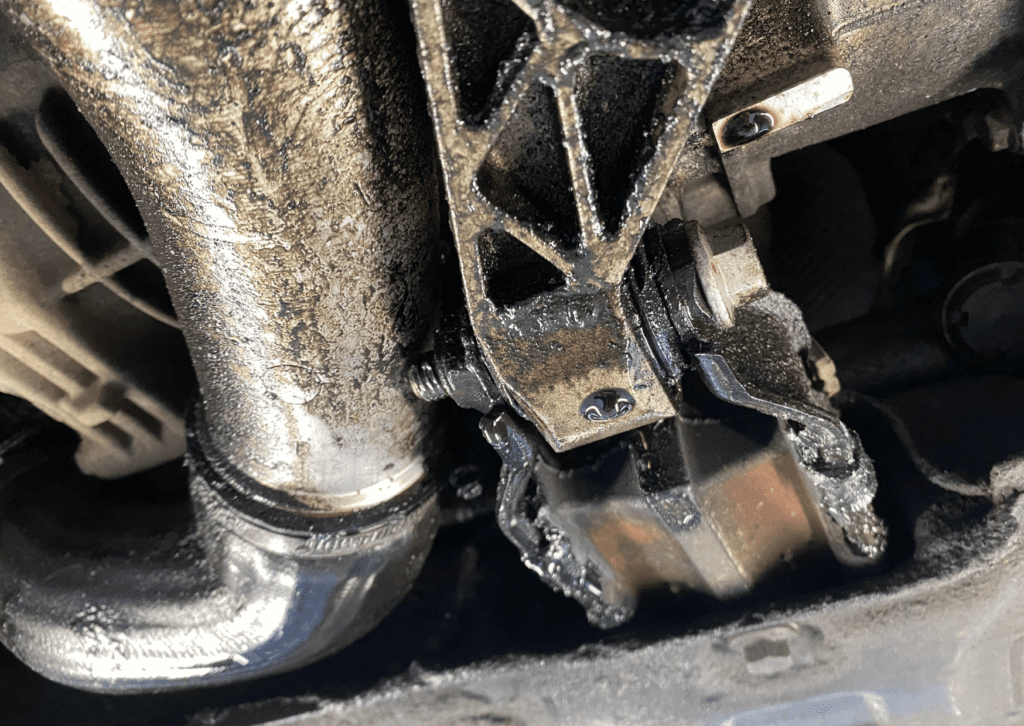
Finding fluid on the ground can turn a normal morning into a problem that needs quick attention. A car leaking fluid when parked does not always mean the vehicle is unsafe, but it should never be ignored. Some leaks are minor, while others can affect the engine, braking system, cooling system, transmission, or fuel tank.
Start by looking at the puddle without touching it. Notice where the leaking fluid appears, what color it is, how large the puddle is, and whether you noticed any smell. If you find fluid under the car overnight, the fresh spot may help determine which system is involved.
Before driving, check these basics:
- Look under the front, middle, and rear of the vehicle.
- Check fluid levels if it’s safe, including oil level, coolant, brake fluid, and power steering fluid.
- Watch for overheating, warning lights, unusual noises, or a burnt smell.
- Don’t drive if the leak is heavy, fuel-related, or connected to weak brakes.
A small fluid leak can become a serious issue if it’s left alone. If the leak looks severe, contact the nearest garage or have the car towed instead of taking chances.
How Can Clear Liquid, Clear Fluid, Or Car Leaking Water Point To the Air Conditioning System?

Not every wet spot under a car points to a major repair. In warm weather, a car leaking water is often connected to the air conditioning. When the air conditioning system cools the cabin, moisture can collect and drain below the vehicle. That clear liquid may be just condensation from the AC unit.
You may be seeing simply condensation if:
- The fluid looks like clear water.
- The puddle has no oily feel.
- There is no sweet smell, fuel smell, or burnt smell.
- The water dripping happens after using air conditioning.
- The puddle appears near the front passenger area.
This type of water leaking is often just water from normal condensation. Exhaust condensation may also leave clear fluid near the tailpipe, especially after a cold start. Still, not every clear liquid is harmless. A windshield washer fluid leak can also look like clear water, although some washer fluids have color or scent. If leaking water continues when the air conditioning has not been used, schedule an inspection.
What Does a Coolant Leak Or Car Leaking Coolant Usually Mean?

A coolant leak needs attention because coolant helps control engine temperature. If a car’s coolant leak problem gets worse, the engine can overheat and suffer engine damage. In severe cases, low coolant can lead to severe engine damage, especially if the driver keeps going while the temperature gauge rises.
Coolant may be green, orange, yellow, pink, blue, or another color depending on the vehicle. It may also have a sweet smell. Common causes include a loose connection, a cracked reservoir, a damaged radiator, worn hoses, failed seals, bad gaskets, or a water pump problem. A leak near the engine block may be more serious and should be inspected right away.
Don’t remove a hot radiator cap or coolant reservoir cap. Hot coolant can be under pressure, and opening the system too soon can be dangerous. If you see steam, overheating, or a large puddle under the front of the car, stop driving and let the engine cool.
Coolant helps protect the engine in hot and cold conditions. That matters in Loveland, where drivers can deal with changing weather, mountain trips, and daily traffic. If your vehicle is losing coolant, the cooling system should be inspected before the problem causes a breakdown.
What Should You Know When Your Car Leaks Oil While Parked?

When a car leaks oil, the puddle is usually brown, dark brown, or black. Fresh engine oil may look amber, while older oil often looks darker. An oil leak may come from the oil pan gasket, valve cover gasket, oil filter, oil pan, drain plug, or worn seals. Oil can also spread across the underside of the vehicle, which can make the leak harder to trace.
Oil reduces friction inside the engine and helps protect moving parts. If the engine oil drops too low, heat and friction increase. That can lead to engine damage, expensive repairs, or a vehicle that no longer runs safely. Even if the car still seems normal, leaking fluid from the engine area should be checked.
Check the oil level only when the vehicle is parked on level ground and it’s safe to do so. If the level is very low, don’t keep driving. An oil leak can get worse once the engine warms up and oil pressure increases. A technician can clean the area, inspect the gaskets and seals, and locate whether the leak is coming from the top, side, or bottom of the engine.
A burnt smell may happen when oil drips onto hot parts. You might also notice smoke after driving. That does not always mean the vehicle is about to fail, but it does mean the leak should be addressed before it creates more problems.
Could a Brake Fluid Leak Or Low Brake Fluid Make Driving Unsafe?

A brake fluid leak is one of the most urgent leaks a driver can face. Brake fluid helps transfer pressure through the braking system so the wheels slow down when you press the brake pedal. If fluid is escaping from brake lines, calipers, hoses, or the master cylinder, the car may not stop properly.
Brake fluid is often clear, amber, or light brown, and it may feel slippery. A puddle near the wheels can be a serious warning sign. Low brake fluid, a soft brake pedal, longer stopping distance, or a brake warning light should be addressed immediately.
Don’t assume the vehicle is safe for one more drive if the brakes feel different. The braking system depends on pressure. If that pressure drops, braking performance can change quickly. If you suspect a brake fluid leak, don’t drive the car. Have it inspected where it is, or arrange to have the car towed to a repair shop.
It’s also important not to confuse brake fluid with other car fluid leaks. A small puddle near a wheel may seem minor, but the location matters. If the fluid is near the inside of a tire or under the brake assembly, treat it as a safety concern.
What Can Red Fluid Leaking Or Transmission Fluid Tell You About Car Fluid Leaks?

Red fluid leaking under the center or front-middle of a vehicle often points to transmission fluid, although some power steering fluid can also appear red. Transmission fluid helps the transmission shift, cool, and operate smoothly. A transmission fluid leak can come from the transmission pan, cooler lines, seals, or a loose connection.
If the vehicle hesitates, slips, shifts hard, or makes unusual noises, the leak may be more than a simple puddle. Ignoring it can lead to transmission failure, which is usually far more expensive than fixing a leak early. Red fluid can also turn brown or have a burnt smell when it’s old or overheated.
Car fluid leaks should be diagnosed by color, location, smell, and how the vehicle behaves. Red fluid near the front may not mean the same thing as red fluid under the middle. A proper inspection matters because guessing wrong can lead to topping off the wrong fluid or missing a serious issue.
Transmission problems can develop slowly. You may notice delayed shifting, rough gear changes, or a whining sound while accelerating. These signs, paired with leaking fluid, should not be ignored.
When Should Car Leaks, Fuel Leaks, Or Power Steering Fluid Become an Urgent Problem?

Some car leaks are inconvenient. Others are unsafe. Fuel leaks should always be treated as an urgent problem because fuel is flammable. If you smell gasoline, see fluid near the fuel tank, or notice a strong fuel odor around the vehicle, don’t start the engine.
Power steering fluid can also create trouble. If the power steering reservoir runs low, steering may become noisy, stiff, or difficult. Leaks may come from the pump, hoses, rack, or fluid lines. A driver may first notice whining sounds, difficulty turning, or fluid on the ground near the front of the vehicle.
Any leak deserves attention, but some signs call for immediate help. Smoke, overheating, loss of braking power, red warning lights, fuel smell, a growing puddle, or fluid pouring out instead of dripping should be treated seriously. A vehicle has connected systems, and low fluid in one area can lead to damage in another.
There are times when the safest choice is not to drive. If the car feels unstable, smells strongly of fuel, shows a temperature warning, or leaves a large puddle after sitting, have it inspected before putting it back on the road. Driving with a serious issue can turn a manageable repair into a much larger one.
Final Thoughts
A car leaking fluid when parked should be checked with care because each fluid point refers to a different system. Sometimes the source is harmless, such as just condensation from the air conditioning system. Other times, the leak may involve oil, coolant, brake fluid, transmission fluid, power steering fluid, washer fluid, or fuel.
The safest approach is simple: look at the color, notice the smell, check the location, and respond based on the risk. Don’t touch unknown fluid with your bare hands. Don’t keep driving if the vehicle is overheating, braking poorly, smelling like fuel, making unusual noises, or leaving a large puddle.
For Loveland drivers, a quick diagnosis can prevent stress, protect the engine, and reduce the chance of being stranded. If you’re unsure what the leak means, let a qualified technician inspect it before the problem spreads.

Ready to stop guessing and protect your vehicle? Schedule service with Metric Motors for clear answers, trusted auto repair, and local help when your car starts leaking fluid.
Works Cited
“Contact Auto Repair Loveland CO Shop Metric Motors.” Automotive Repair Loveland, 2026, https://automotiverepairloveland.com/. Accessed 21 May 2026.
“Ethylene Glycol.” ToxFAQs, Agency for Toxic Substances and Disease Registry, Centers for Disease Control and Prevention, https://wwwn.cdc.gov/TSP/ToxFAQs/ToxFAQsDetails.aspx?faqid=85&toxid=21. Accessed 21 May 2026.
“Managing, Reusing, and Recycling Used Oil.” United States Environmental Protection Agency, 25 June 2025, https://www.epa.gov/recycle/managing-reusing-and-recycling-used-oil. Accessed 21 May 2026.
“Standard No. 106; Brake Hoses.” Electronic Code of Federal Regulations, National Highway Traffic Safety Administration, Department of Transportation, https://www.ecfr.gov/current/title-49/subtitle-B/chapter-V/part-571/subpart-B/section-571.106. Accessed 21 May 2026.