
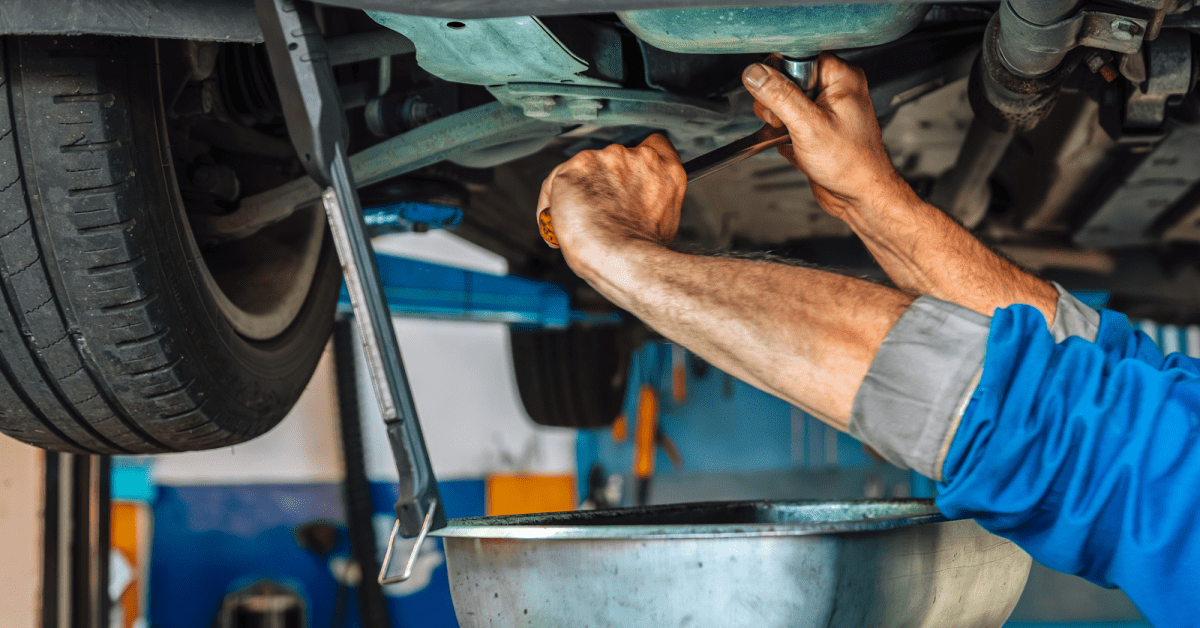
What Causes Oil Leaks in Cars?
If you have been wondering what causes oil leaks in car problems, the answer usually comes down to wear, heat, pressure, and maintenance history. Your engine depends on engine oil to lubricate moving engine parts, reduce friction, carry heat away, and help keep the engine clean. For that to happen, the oil has to stay where it belongs. Gaskets, seals, the oil filter, the oil pan, and other components all work together to keep oil contained.
When one of those parts starts to wear down, it creates an opening that allows oil to escape. That is when drivers may notice oil leaks, oil spots under the car, or a burning oil smell after a drive. In some cases, a car leaking oil has only a small leak. In other cases, the leak gets worse fast and becomes a major oil leak that needs immediate attention.
Several factors can be involved. Age matters. Heat cycles matter. A rough road, skipped service, or a poor installation during an oil change can all start causing oil to leak. The good news is that many engine oil leaks can be found early and fixed before they turn into engine damage or expensive repairs.
What Are The Most Common Causes Of Oil Leaks?
The most common causes of oil leaks usually come from the parts that seal, store, or route oil through the engine. Over time, worn-out gaskets lose flexibility, seals dry, and metal parts can loosen or crack. Older vehicles are especially likely to develop leaks because rubber and gasket material break down with age.
Some of the common causes include:
- A worn valve cover gasket or cover gasket
- A failing oil pan gasket or oil pan leak
- A loose drain plug or damaged oil drain plug
- An improperly installed oil filter or loose filter
- Worn seal issues around camshaft seals or main seals
- A damaged oil pan caused by road debris
- Leaks near the timing cover, oil cooler lines, or engine block
The cause of the leak is not always obvious at first glance. A leak near the top of the engine can run downward and make it look like the oil pan is failing when the real problem is higher up. That is why a careful visual inspection matters. It helps separate minor issues from bigger ones and prevents the wrong fix from being made.
How Do The Oil Pan, Drain Plug, And Oil Filter Cause A Leak?
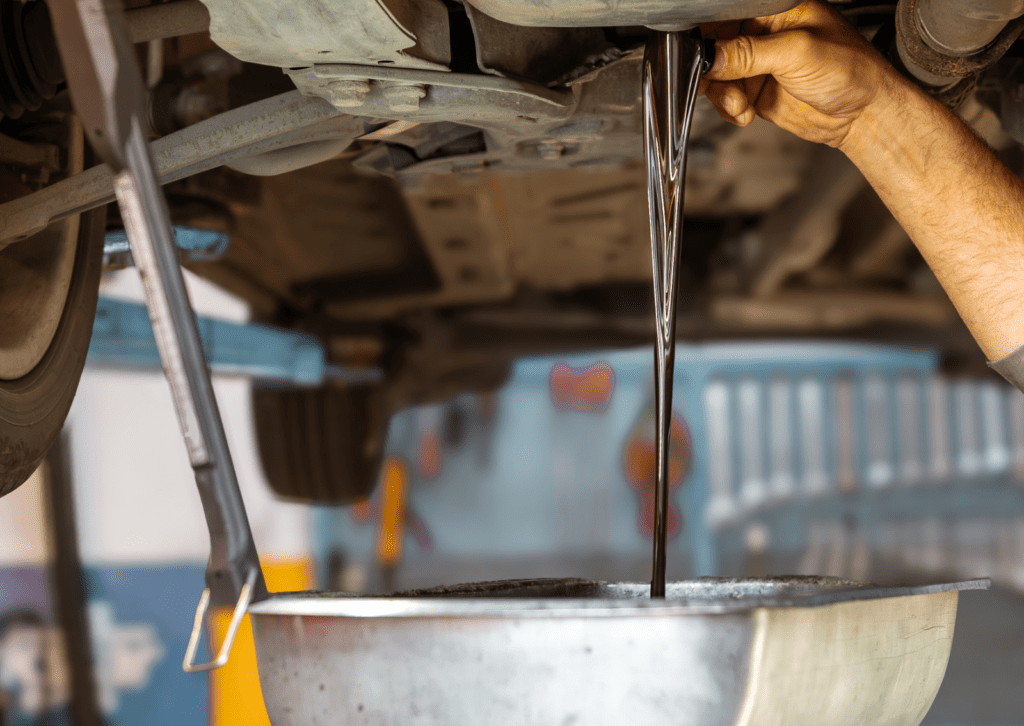
The oil pan sits at the bottom of the engine and holds much of the engine oil when the vehicle is parked or the oil drains back down. Because it is low to the ground, it is vulnerable to impact. A damaged oil pan can happen after contact with road debris, a hard scrape, or corrosion over time. Once the pan is bent, cracked, or weakened, it can allow oil to leak slowly or drip directly onto the ground.
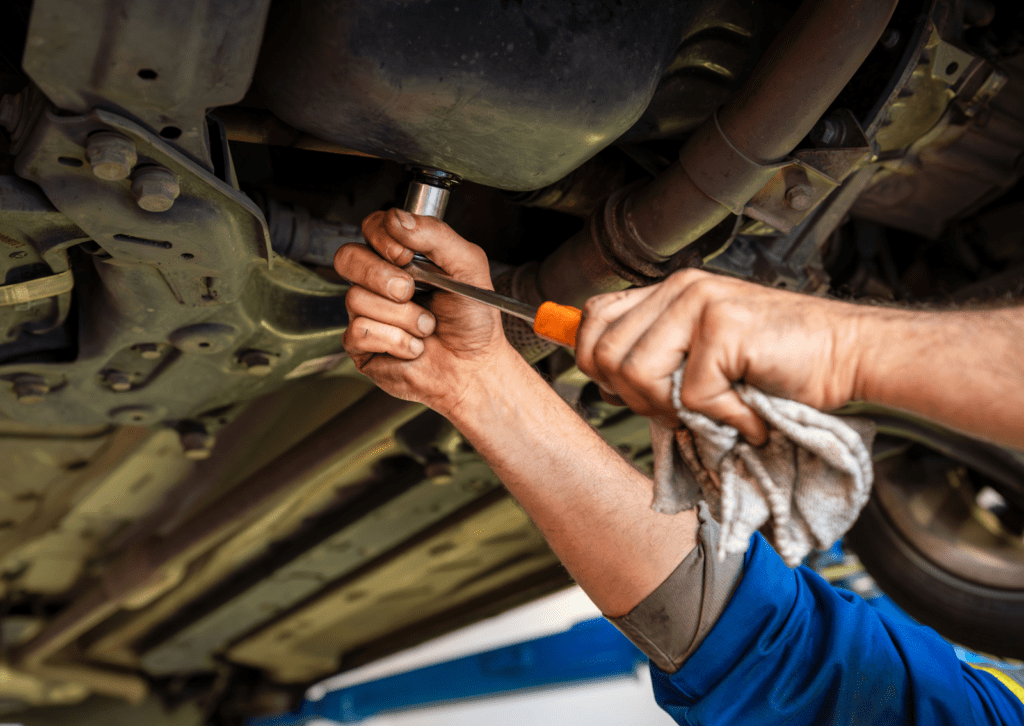
The drain plug is another common trouble spot. During an oil change, the drain plug is removed so old oil can come out. If the oil drain plug is over-tightened, cross-threaded, or not sealed properly, it can turn into a loose drain plug problem. Even a tiny opening there can allow oil to escape every time the engine warms up and vibration increases.
The oil filter can also be the source of leaking oil. A filter that is loose, damaged, or installed with the old gasket still attached can create engine oil leaks very quickly. An improperly installed oil filter may not hold pressure the way it should. A new filter needs to be fitted correctly, and the sealing surface must be clean. If not, the problem worsens and what starts as a small drip can turn into steady oil loss.
Why Do Valve Cover Gasket, Cover Gasket, And Oil Seals Fail?
The valve cover sits on top of the engine and helps keep oil where it belongs as it moves through the upper engine. The valve cover gasket seals that connection. With time and heat, that gasket becomes brittle. Once it hardens or shrinks, it stops sealing well and starts allowing oil to escape. That can leave the outside of the valve cover wet and dirty, with oil running down into the engine bay.
Other seals can fail for the same reason. Camshaft seals, main seals, and other oil seals are exposed to constant heat, motion, and pressure. As they age, seals dry, lose flexibility, and stop fitting tightly against moving surfaces. A worn seal or worn gasket can begin as a small leak and slowly become worse.
The rear main seals are especially important because they sit where the crankshaft exits the engine. If those seals fail, the repair can be more involved because of where they are located. Timing cover leaks can also be tricky because oil may spread across surrounding engine parts and make the source harder to see. When worn-out gaskets or aging seals develop leaks, the best move is to diagnose the exact source early before further damage spreads the mess and raises the repair cost.
What Warning Signs Help You Notice Oil Leaking Early?
The best time to deal with oil leaks is before they become serious. Many drivers notice oil leaking only after the vehicle leaves a stain behind, but there are often warning signs earlier than that.
Look for these clues:
- Oil spots under the vehicle after parking
- Oil pooling under the front or center of the car
- A burning oil smell from the engine bay
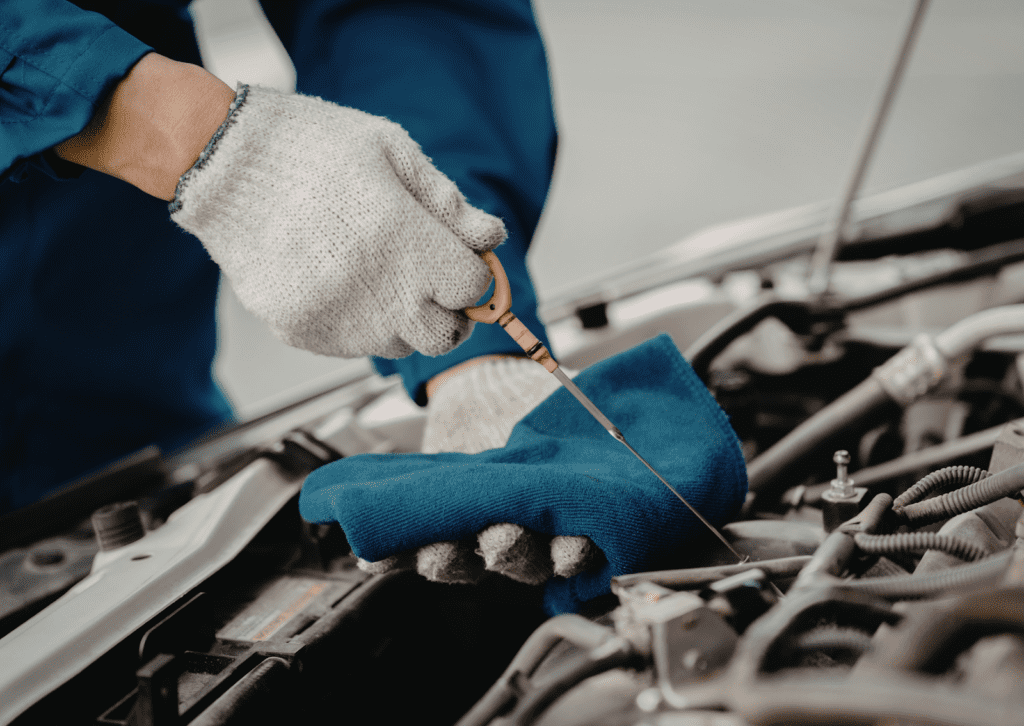
- A drop in oil level on the dipstick
- Smoke or odor when oil reaches hot engine parts
- Wet or dirty buildup around the valve cover, oil pan, drain plug, or timing cover
You should also pay attention to the color and feel of the fluid. Engine oil is often lighter when fresh, while old oil is typically brown or darker. If the fluid looks red or very thin, it may be transmission fluid instead. That is one reason a visual inspection is helpful before anyone guesses.
If you notice oil leaking, do not wait for the leak to grow. Even if it seems small, the source may be under pressure, or it may be spreading to places you cannot easily see. Early detection gives you more options and usually means a simpler fix.
When Can A Small Leak Turn Into Engine Damage?
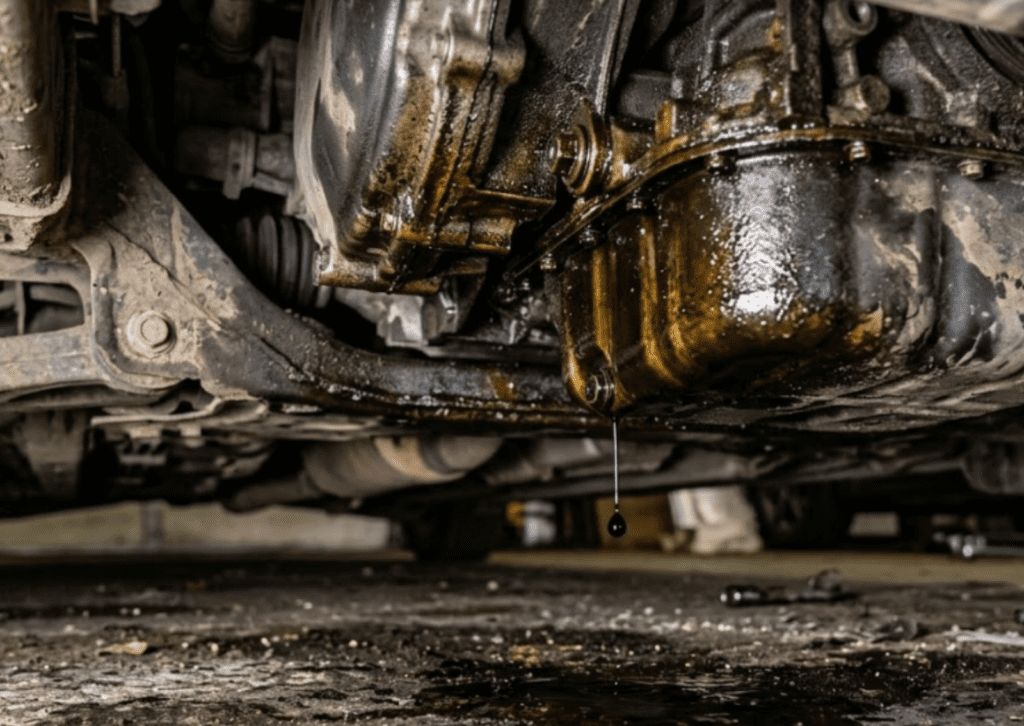
A small leak becomes serious when it leads to low oil level, low oil pressure, or oil reaching the wrong parts of the vehicle. Many drivers ask how much oil loss is too much. There is no single answer that fits every car because engines hold different amounts of oil and lose it at different rates. Still, any leak that keeps coming back deserves attention.
If the engine does not have enough oil, lubrication drops and metal surfaces can start rubbing harder against each other. That can damage bearings, timing components, and other engine parts. If oil pressure falls too low, the risk of engine damage rises fast. A leak can also create problems outside the engine itself. Oil on hot surfaces can create a strong odor, oil on rubber parts can shorten their life, and oil spread across the underside can hide the true source of the problem.
This is why even a leak that looks minor should not be left unchecked. A small leak today may only leave a few drops. A week later, the same opening may be allowing oil out much faster. What could have been a straightforward gasket or filter repair can grow into expensive repairs if the issue is ignored.
How Can Preventing Oil Leaks Save Your Vehicle From Further Damage?
Preventing oil leaks starts with regular service and a little attention between visits. The goal is simple: keep the oil system sealed, keep the correct oil grade in the engine, and catch wear before it becomes a real leak. This matters because preventing oil leaks is almost always easier and less expensive than repairing the damage they can leave behind.
Routine oil change service helps because it gives a technician a chance to check the filter, drain plug, oil level, and the general condition of the engine. A good inspection may catch a worn gasket, signs that oil cooler lines are sweating, or a small oil pan leak before it gets worse. It also helps confirm that the right filter and correct oil grade are being used.
Drivers can help too. Check for oil spots where you park. Pay attention to smell after a drive. Watch for changes in oil pressure or warning lights. If your car has been driven on rough roads, remember that a low-mounted oil pan can be damaged by road debris. Good habits do not prevent every leak, but they do prevent oil problems from being ignored. That early attention can protect the engine, reduce oil loss, and keep a manageable repair from becoming a much bigger one.
What Should You Do Next If Your Car Is Leaking Oil?

If your car is leaking oil, the best next step is to act early and stay practical. Check the dipstick, look under the vehicle, and note whether the leak seems fresh or old. If you see oil pooling, smell burning oil, or notice the oil level dropping, do not assume it will stop on its own. Leaks usually get worse, not better.
Try not to guess the exact source without help. Oil can travel across surfaces, so the place where it shows up is not always the place where it started. The cause of the leak could be the oil pan gasket, the valve cover gasket, the drain plug, the timing cover, the engine block area, or even a filter problem. A professional mechanic can trace the leak, inspect the affected area, and recommend the right fix instead of replacing parts at random.
The most helpful takeaway is this: what causes oil leaks in car problems is usually something physical that has worn out, loosened, cracked, or been installed incorrectly. That means the sooner you have the vehicle inspected, the better your chance of avoiding further damage. Fast attention protects your engine, protects your budget, and gives you a better shot at solving the problem while it is still manageable.
If you notice oil spots, a burning oil smell, dropping oil level, or any sign your car is leaking oil, schedule service with Metric Motors. Their Loveland shop offers oil changes, maintenance, engine services, and inspections that fit the kind of issue covered in this article, making them a strong local option for diagnosing the leak and helping you protect your vehicle before the problem worsens.
Works Cited
AAA. “Low Engine Oil Pressure: Causes, Symptoms and How to Fix.” AAA, 22 Mar. 2022, mwg.aaa.com/automotive/auto-repair/articles/low-engine-oil-pressure-causes-symptoms-how-to-fix.
Car Care Council. “Vehicle Systems Overview.” Car Care Council, www.carcare.org/vehicle-systems-overview/.
Metric Motors. “Car Engine Repair Services: What Every Driver Should Know.” AutomotiveRepairLoveland.com, automotiverepairloveland.com/auto-engine-repair-service/car-engine-repair-services-diagnostics-overhauls/.
Metric Motors. “Not All Oil Changes Are The Same!” AutomotiveRepairLoveland.com, automotiverepairloveland.com/auto-repair-services/general-services/.
Metric Motors. “Urgent Signs Your Car Needs an Oil Change for Longevity.” AutomotiveRepairLoveland.com, automotiverepairloveland.com/oil-change/red-alerts-oil-change-signs/.
United States Environmental Protection Agency. “Managing, Reusing, and Recycling Used Oil.” EPA, 25 June 2025, www.epa.gov/recycle/managing-reusing-and-recycling-used-oil.
U.S. Department of Transportation, National Highway Traffic Safety Administration. “Oil Leak Diagnosis and Repair.” 27 Jan. 2020, static.nhtsa.gov/odi/tsbs/2020/MC-10171405-9999.pdf.
U.S. Department of Transportation, National Highway Traffic Safety Administration. “Service Bulletin Information.” 2 Sept. 2022, static.nhtsa.gov/odi/tsbs/2022/MC-10222777-0001.pdf.