

Colorado summers arrive fast, and when your car’s AC starts blowing warm air or cycling erratically on a 95-degree day, it rarely means a simple recharge. Car AC and climate control repair covers a connected set of mechanical and electronic systems, and getting the right fix depends on diagnosing the right component. This guide covers what goes wrong, what warning signs to watch for, and what proper service looks like before you book an appointment.
Quick Answer: What Does Car AC and Climate Control Repair Cover?
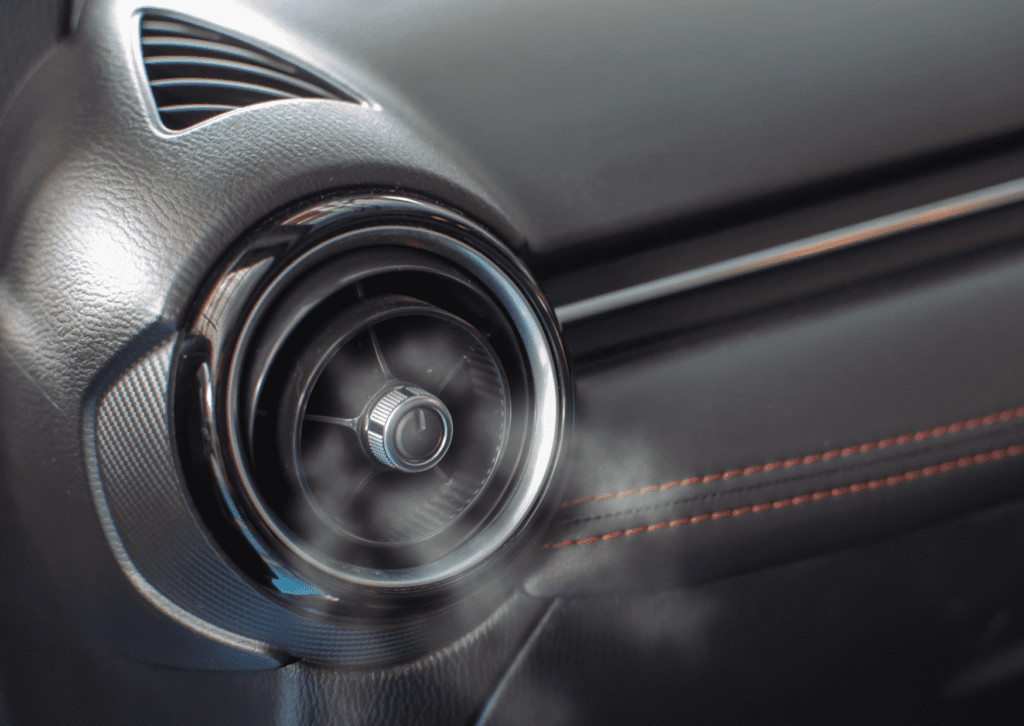
Car AC and climate control repair includes diagnosis and service of the compressor, refrigerant lines, condenser, evaporator, expansion valve, blower motor, blend door actuators, and control module. The fault may be mechanical, electrical, or both. If your vehicle needs climate control service in Loveland, a full system inspection is the right starting point, not just a refrigerant top-off.
How Car AC Systems Work and Why They Fail
The AC system removes heat from the cabin rather than pumping cold air in. Refrigerant cycles through a pressurized loop: the compressor raises pressure and temperature, the condenser releases that heat to the outside air, the expansion valve drops pressure sharply, and the evaporator absorbs cabin heat as the refrigerant expands. Any failure in that sequence disrupts cooling.
Common causes of car AC failure include:
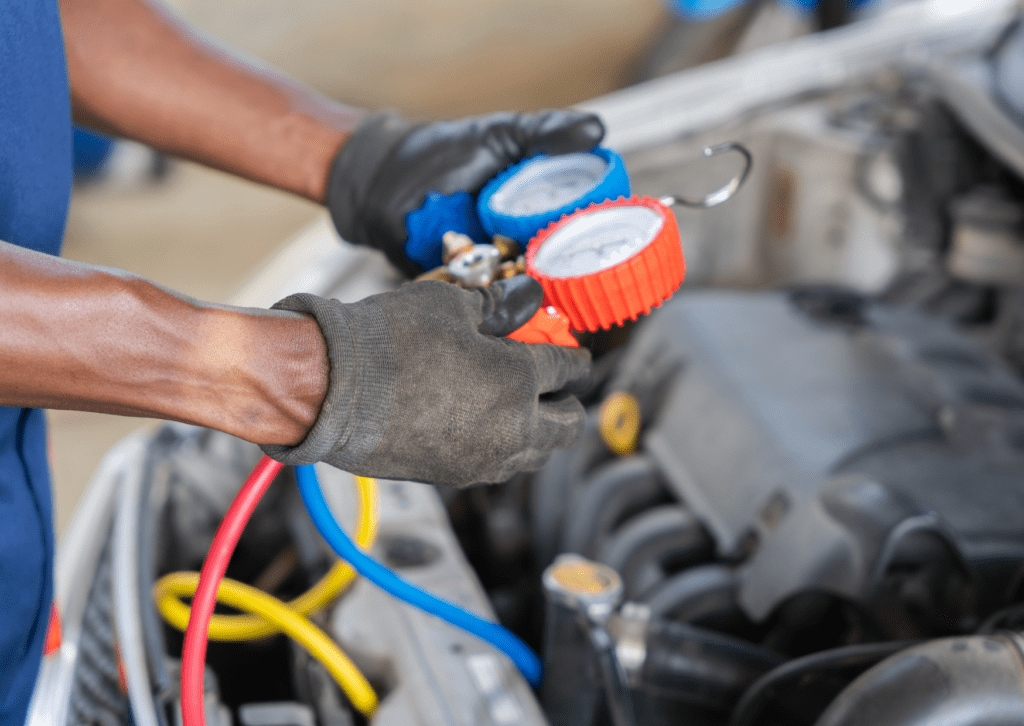
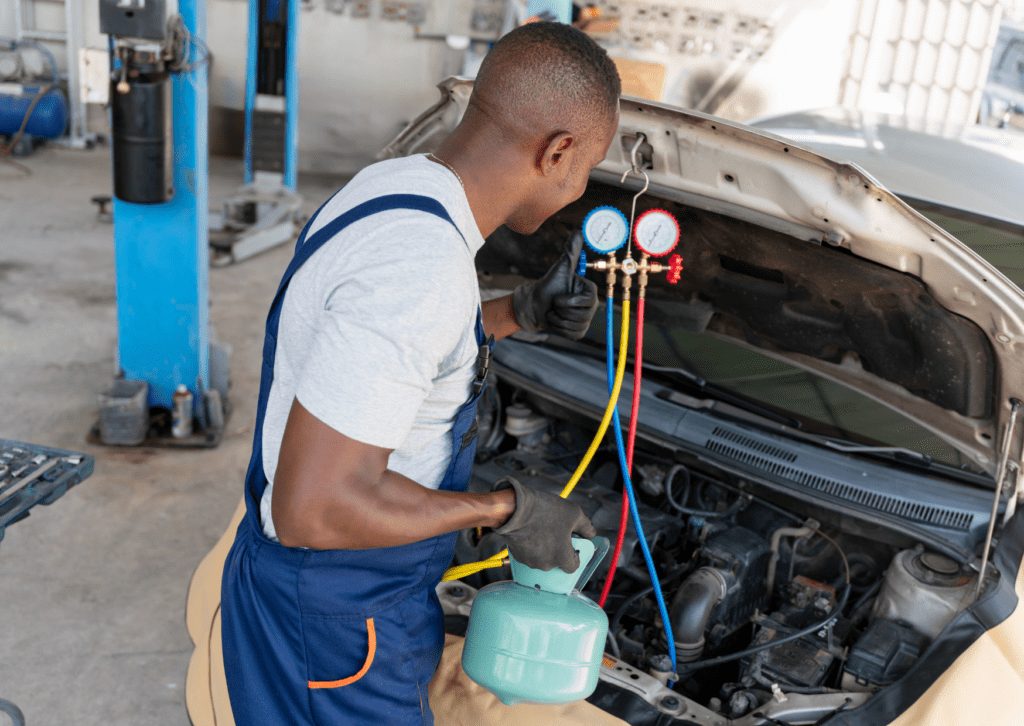
- Refrigerant leak: The most frequent cause. Low refrigerant points to a leak, not a normal maintenance cycle. Recharging without finding and fixing the leak may only provide temporary relief, because topping off or recharging does not permanently fix refrigerant leaks.
- Failed compressor or compressor clutch: Often presents as a grinding or rattling noise the moment the AC is switched on.
- Damaged condenser: Located directly behind the front grille, it’s exposed to road debris on every drive. Northern Colorado’s gravel roads and construction zones can increase the risk of condenser damage from rocks, debris, and blocked airflow.
- Faulty expansion valve or orifice tube: Can cause poor cooling, warm air, frost buildup, abnormal refrigerant flow, or intermittent cooling.
- Blower motor or resistor failure: Results in weak or no airflow even when refrigerant levels are normal.
- Clogged cabin air filter: One of the most commonly skipped service items. A severely blocked filter chokes airflow before it ever reaches the vents.
Car AC and Climate Control Repair: Warning Signs to Watch For

The system usually shows warning signs before it fails completely. Watch for:
- Warm or lukewarm air from vents when the AC is on max cold
- Weak airflow that doesn’t improve at higher fan speed settings
- Clicking or grinding when the compressor engages
- AC that cools well for the first 20 minutes and then fades on longer drives
- A musty or mildew smell from the vents (usually evaporator mold or a neglected cabin air filter)
- Windows that take longer than normal to clear on defrost settings
- A burning or chemical smell near the dashboard vents
Catching a refrigerant leak or a failing compressor clutch early costs significantly less than replacing a seized compressor after the fact.
Standard AC vs. Automatic Climate Control: Why It Matters for Diagnosis
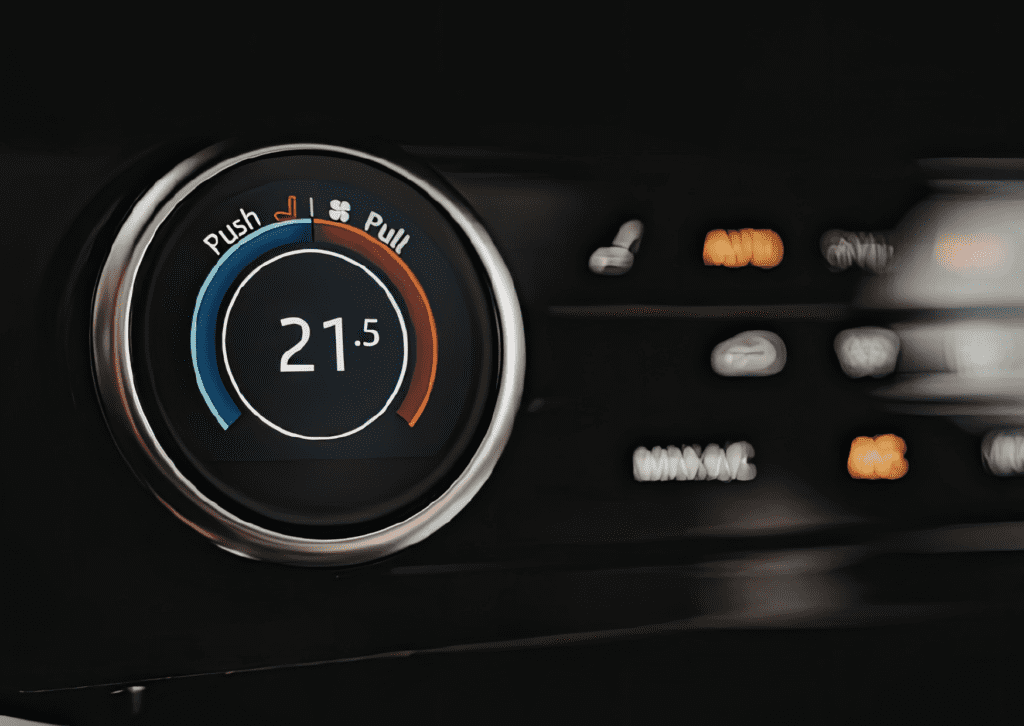
Standard AC gives you manual control of temperature and fan speed. You adjust it, the system responds. Automatic climate control, common in luxury vehicles and many late-model imports, uses sensors, blend door actuators, and an electronic control module to hold a set cabin temperature on its own.
Understanding climate control components and functions changes the diagnostic path. A vehicle blowing the wrong temperature might have a refrigerant problem. It might also have a failed actuator or a sensor reading incorrectly. Those two problems require different tools and different repairs. Treating an electrical fault as a refrigerant issue means the repair won’t hold.
The Part Most Guides Skip: Electrical Faults in Climate Control
Most AC content focuses entirely on refrigerant and mechanical components. The electrical system and climate control relationship in modern vehicles is where problems increasingly go undiagnosed until they’ve gotten worse.
Blend door actuators fail and produce uneven temperatures across the cabin, especially in dual-zone systems. Temperature sensors drift and cause overcooling or undercooling without an obvious pattern. Control modules develop faults that make buttons behave erratically, ignore inputs, or reset settings after every startup. These issues often don’t trigger a warning light. Diagnosing them correctly requires a scan tool and familiarity with HVAC-specific fault codes and module communication.
Keeping Your Climate Control System Running Well
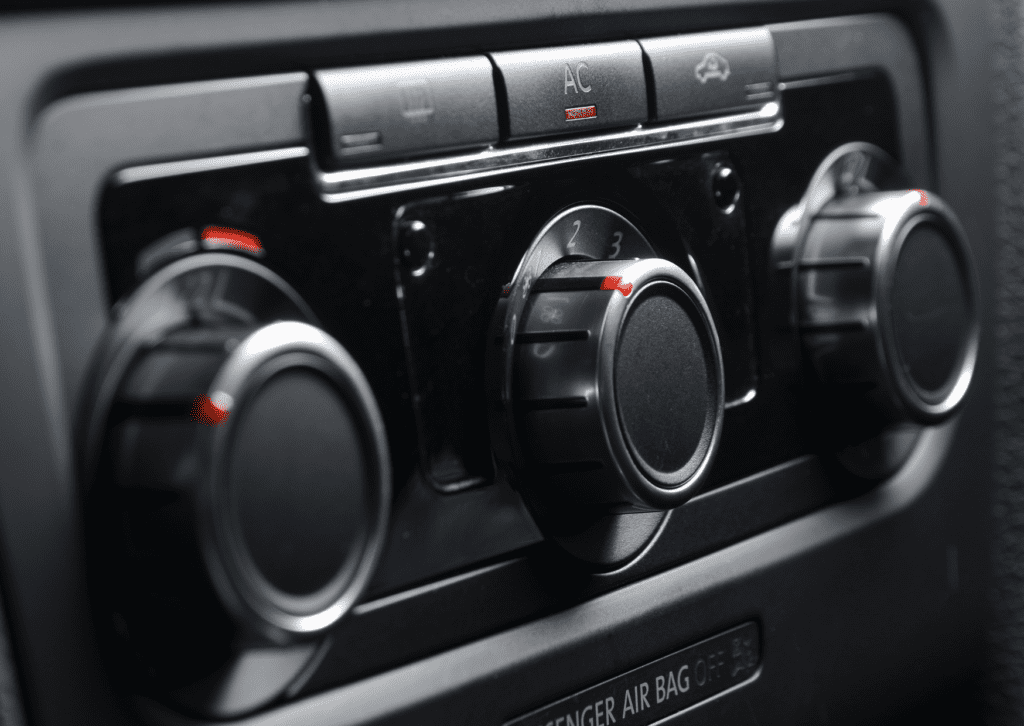
Close-up of vehicle AC control panel with fan speed and temperature knobs on dashboard display
Routine care extends system life and keeps small problems from becoming expensive repairs. Climate control maintenance steps go beyond a periodic refrigerant check:
- Replace the cabin air filter every 15,000 to 25,000 miles
- Run the AC briefly each week during winter, even 10 minutes at a time, to keep compressor seals from drying out
- Inspect the condenser for debris or physical damage after driving on gravel or construction roads
- Address musty smells quickly rather than masking them; they usually indicate evaporator mold that gets worse when ignored
- Have actuators and sensors tested on automatic climate systems when symptoms appear or during a full climate control inspection.
Skipping routine maintenance doesn’t save money. It converts manageable fixes into major ones.
Final Thoughts on Car AC and Climate Control Repair

If your car’s AC is blowing warm, cycling strangely, making unfamiliar noises, or just not keeping up with summer temperatures in Loveland, the problem won’t go away on its own. The sooner a problem is diagnosed, the simpler and less expensive the repair is likely to be.
Metric Motors handles car AC repair in Loveland for Asian imports, European vehicles, and American cars. We test the full system before recommending any work, mechanical side and electrical side, and walk you through what we find before anything gets replaced.
Call 970-667-2044 or schedule online. Getting it checked now is far easier than dealing with a failed AC on the hottest week of the year.